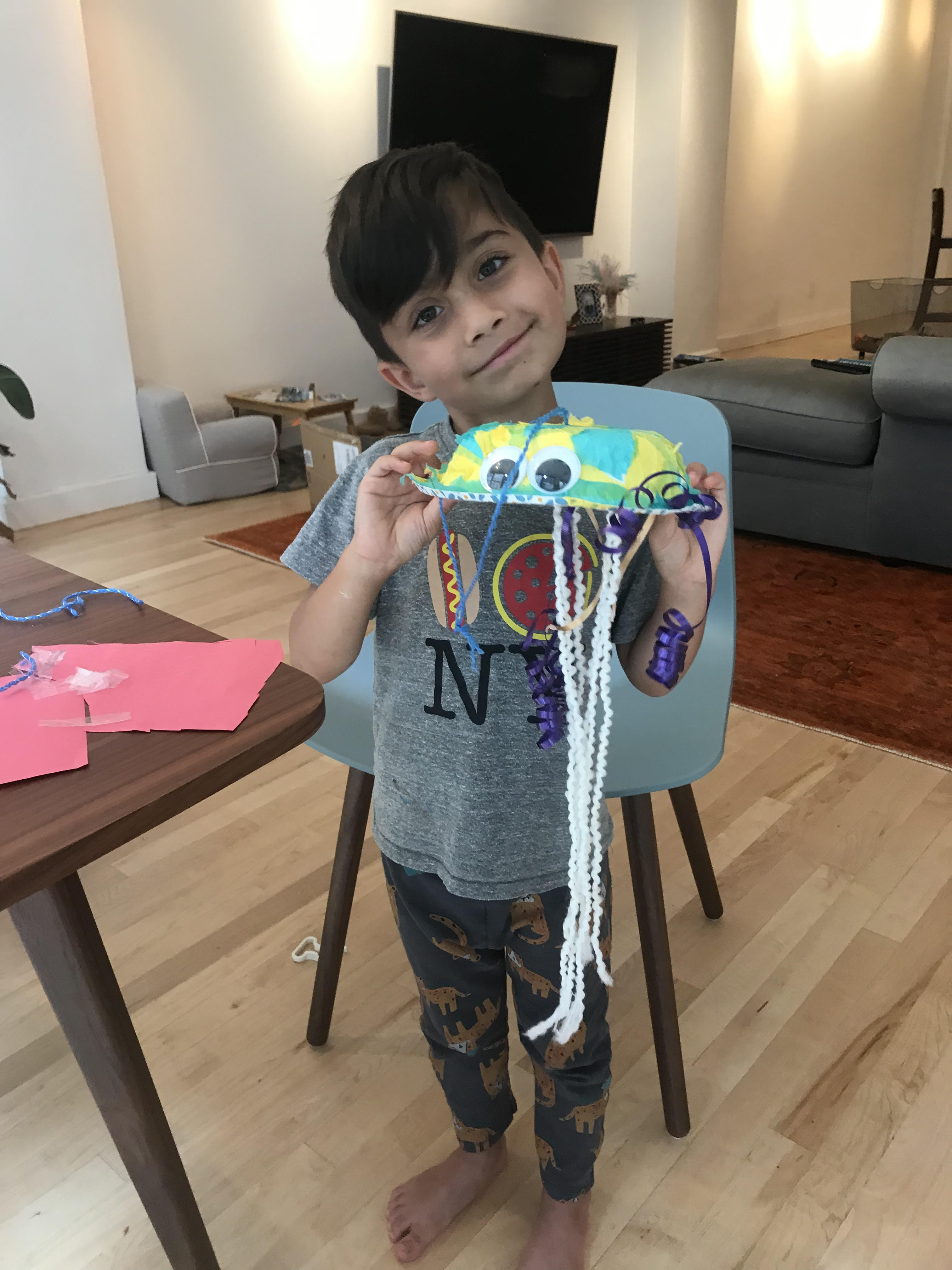
Another excellent Take and Make craft.
Don’t forget to send us pictures of your Take and Make crafts.
PBL@rcls.org
Rave Reviews by Jean E. Eustance September 2021
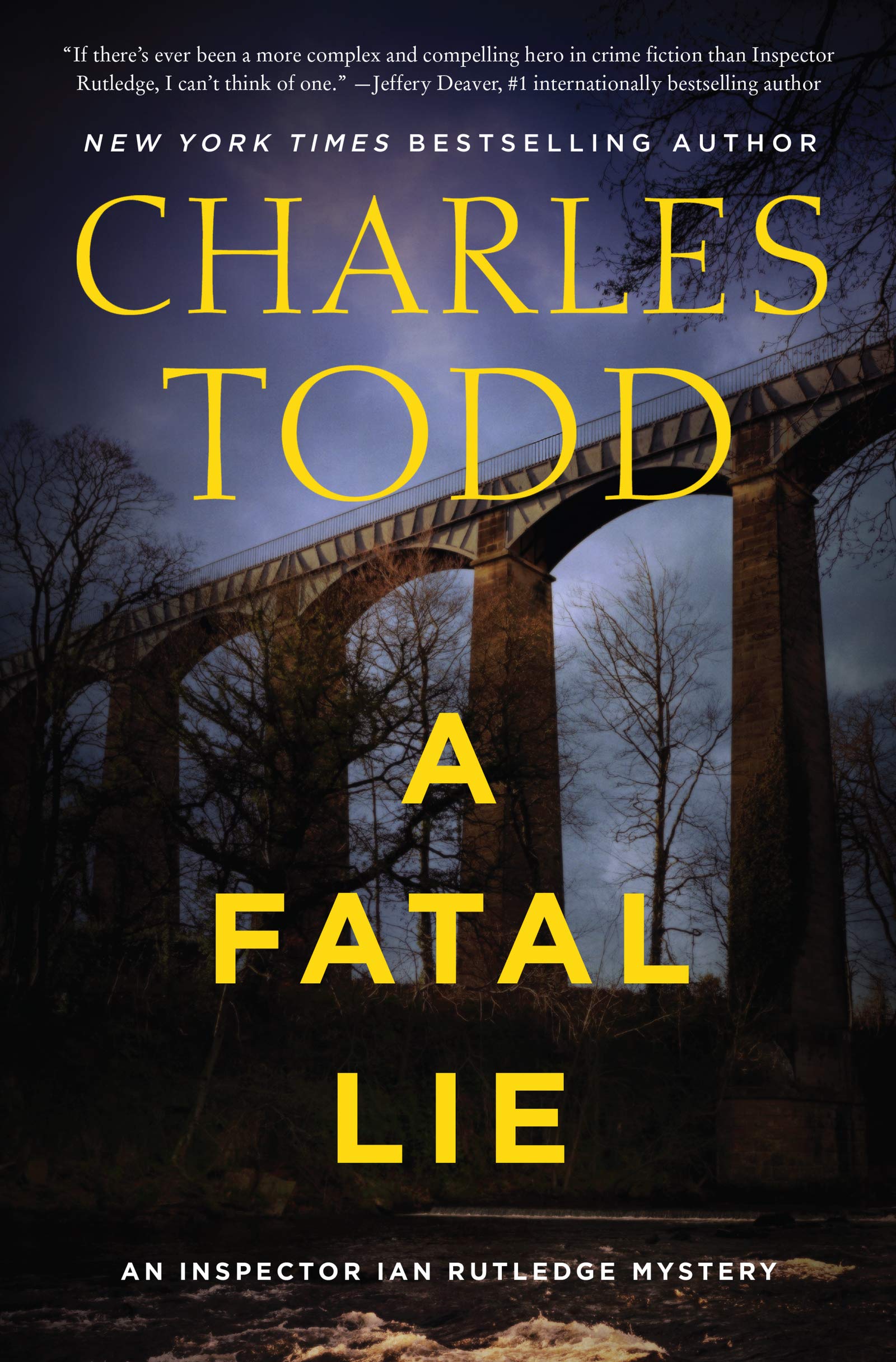
I have read several of the Ian Rutledge books by Charles Todd. We have some of them in the Pine Bush Area Public Library. The newest one is A Fatal Lie. In it, Inspector Rutledge, of Scotland Yard, is dispatched to Wales because a man has been found dead in a river, in 1921. The Chief Superintendent is keen to get Ian Rutledge out from under his feet, and Wales (in the rain) seems just the place to send him.
Ian Rutledge is a veteran of the Great War—they have not had World War II yet, so no one calls the first one, World War I. They also do not call the problem Post-Traumatic Stress Disorder, they call it Shell Shock. But Ian does not want anyone to know that he has shell shock—and a voice in his head. In the Great War, he had to have one of his soldiers killed because Hamish would not lead the men “over the top” once more, and Hamish refused an order, and died. Now Ian Rutledge cannot get rid of him. He can’t see Hamish, but he can hear him, standing behind him saying, “Ware!” for “Beware!” as in, “Get down, you idiot!” And occasionally Ian gets down in time, and sometimes he doesn’t, as on page 204 when someone crowns him with a crowbar.
Our Hero has a tendency to find things out—things that are not wanted. The doctor tells him that the man in the river probably fell from the aqueduct, the bridge that carries the canal across the river’s ravine. Ian traces a tattoo and a label on a shirt, and identifies the man, and finds his widow and a failing pub that is eating up all the money, over the border in England. And that is when the plot thickens. There is a missing child, and one lie after another, and another and another until you cannot tell which one would be the Fatal Lie.
The Ian Rutledge series (this title is number 23) is gritty and realistic. It is a little too detailed and realistic for my taste. I usually read whatever book in the series I’m at, quite eagerly for a day and half, and then I bog down. I like a little more humor than I find here, and Hamish seems to be the only thing that’s near being humorous—which is pretty sad when you think about it. I find the series ghastly and gritty, sad and sordid, and filled with shadows. If you like your murder mysteries long, heavy and drenched with rain, you will probably like A Fatal Lie. Read it. And better you than me.
Our September Newsletter is available.
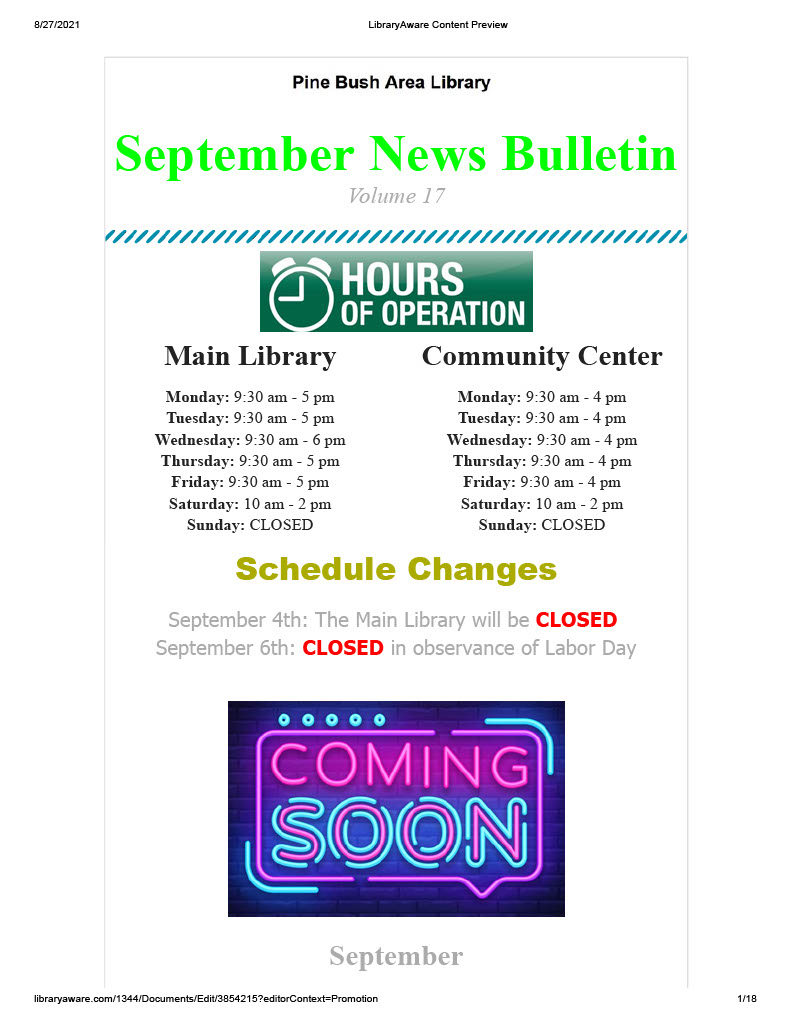
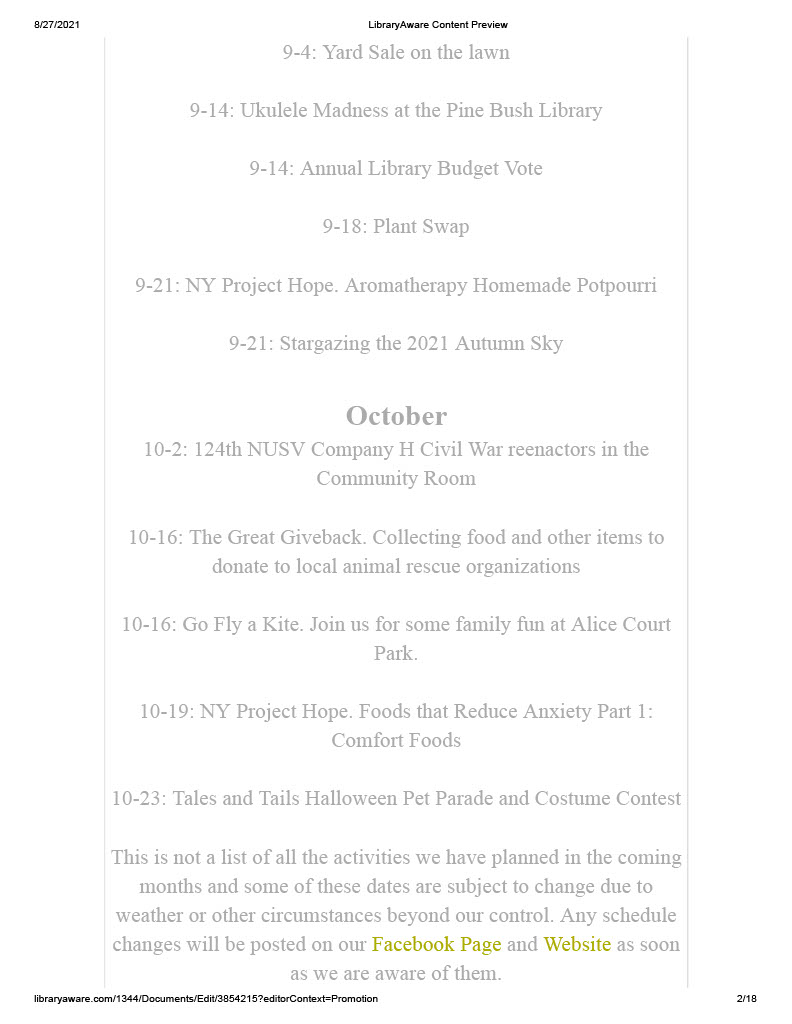
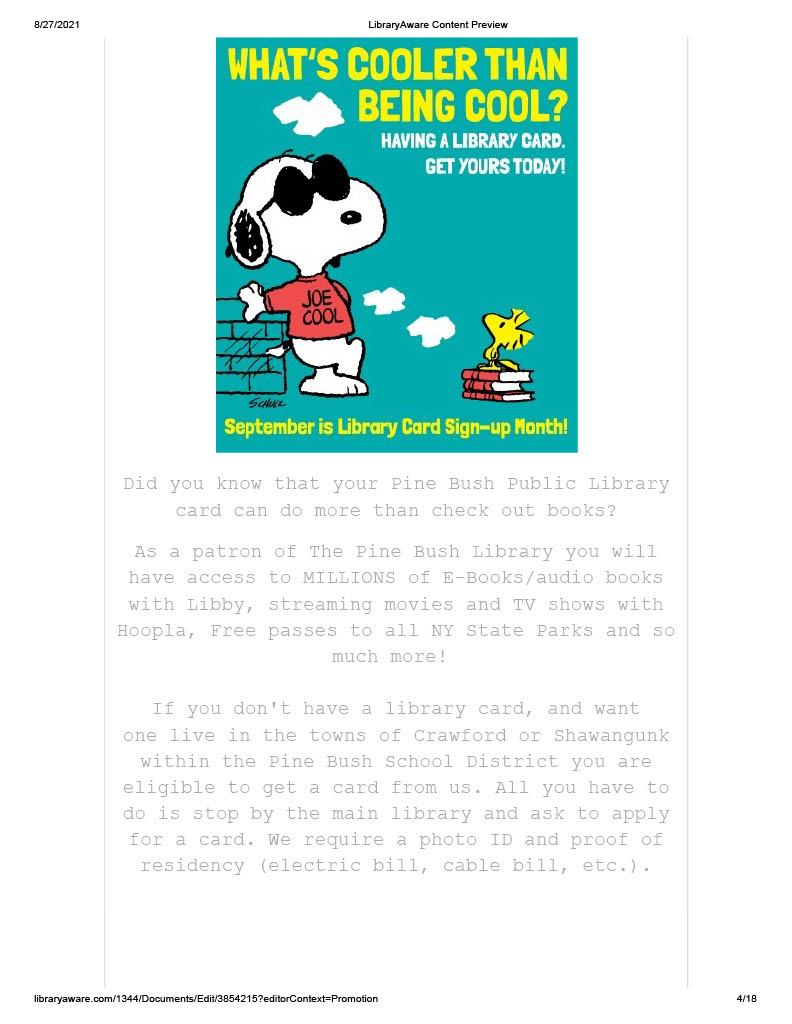
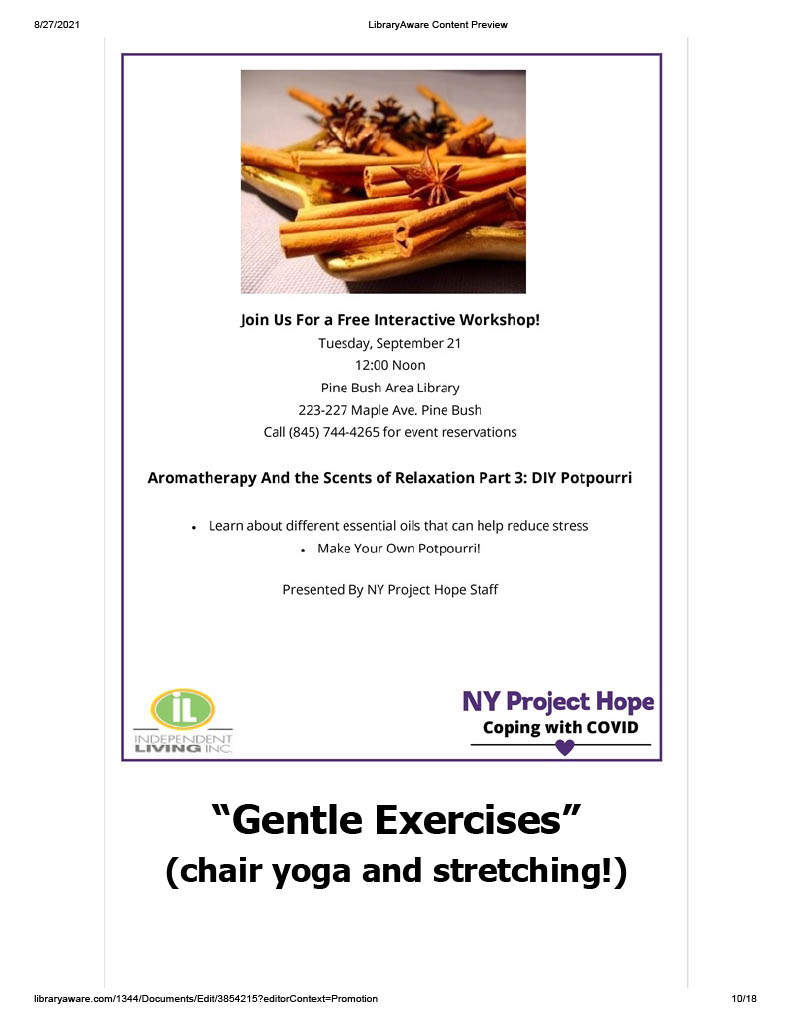
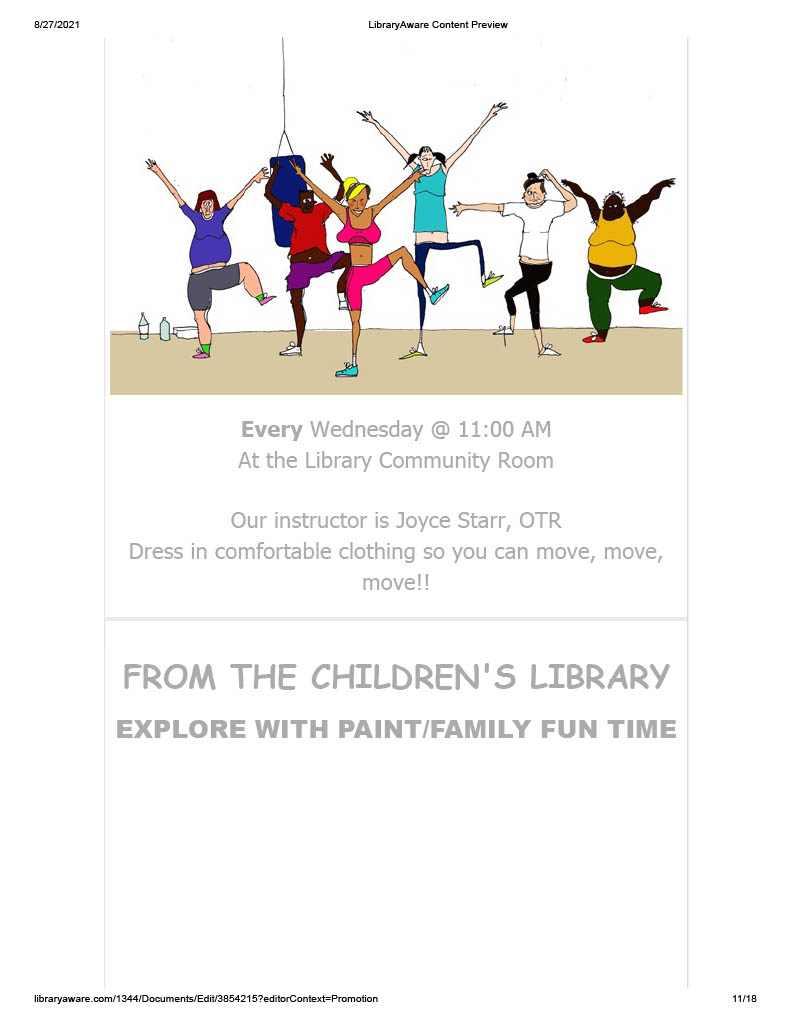
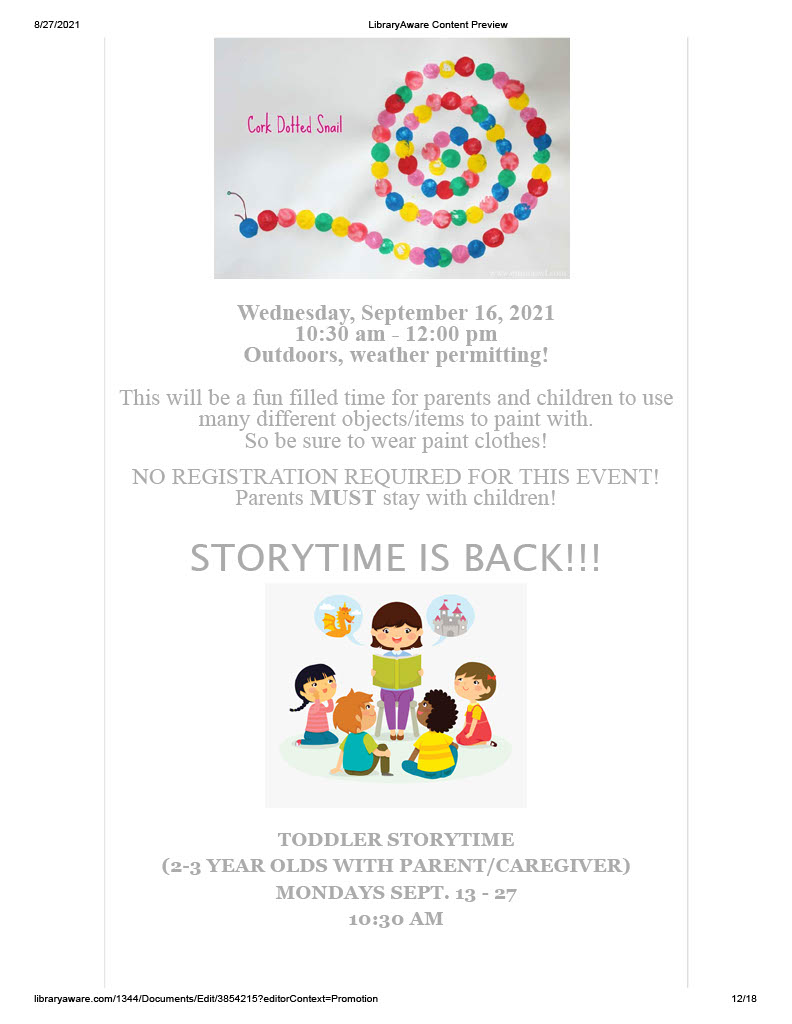
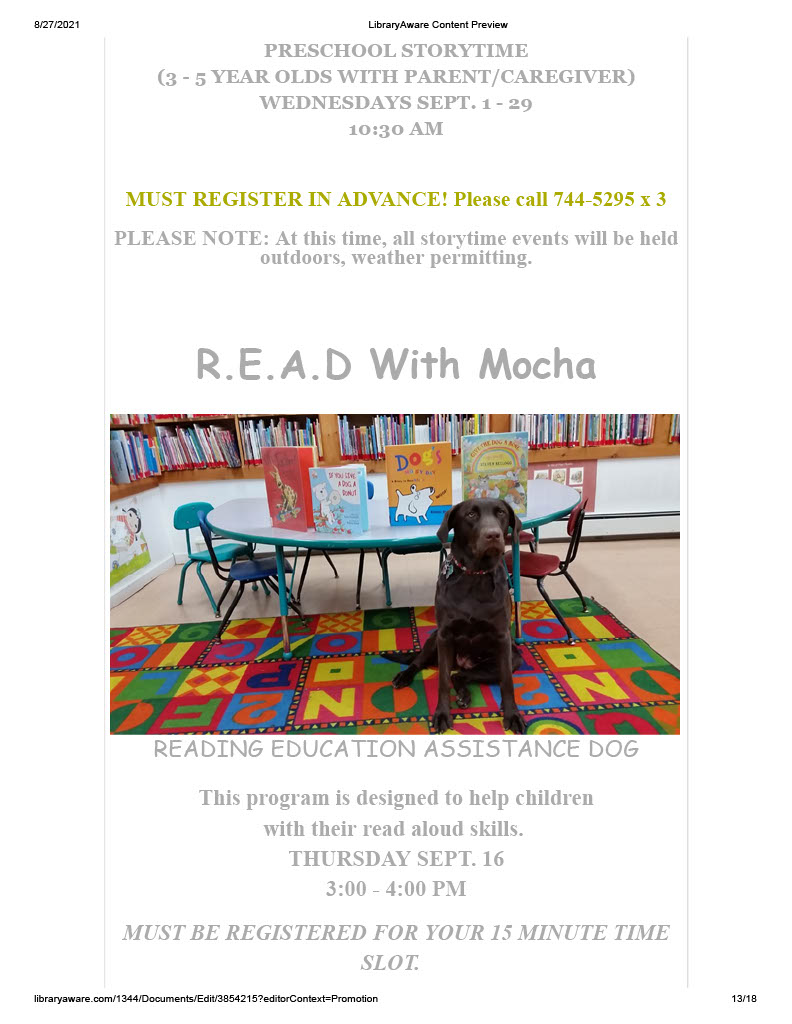
If you would like to get our newsletter emailed directly to you just send an email to pbl@rcls.org
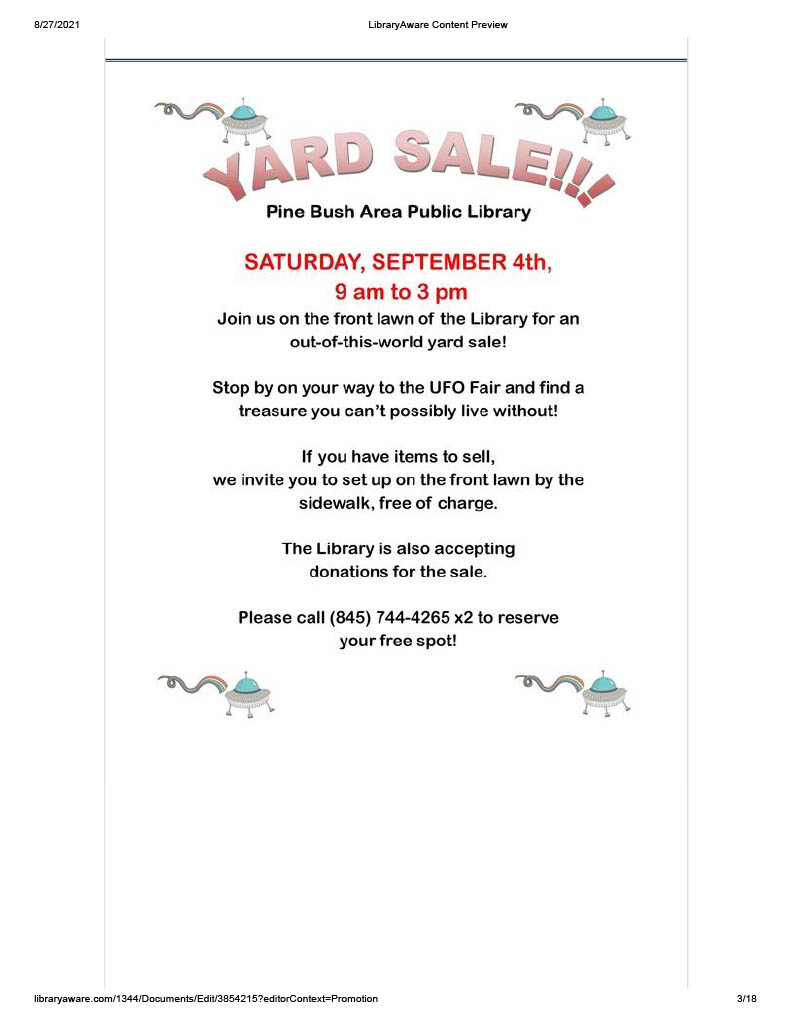
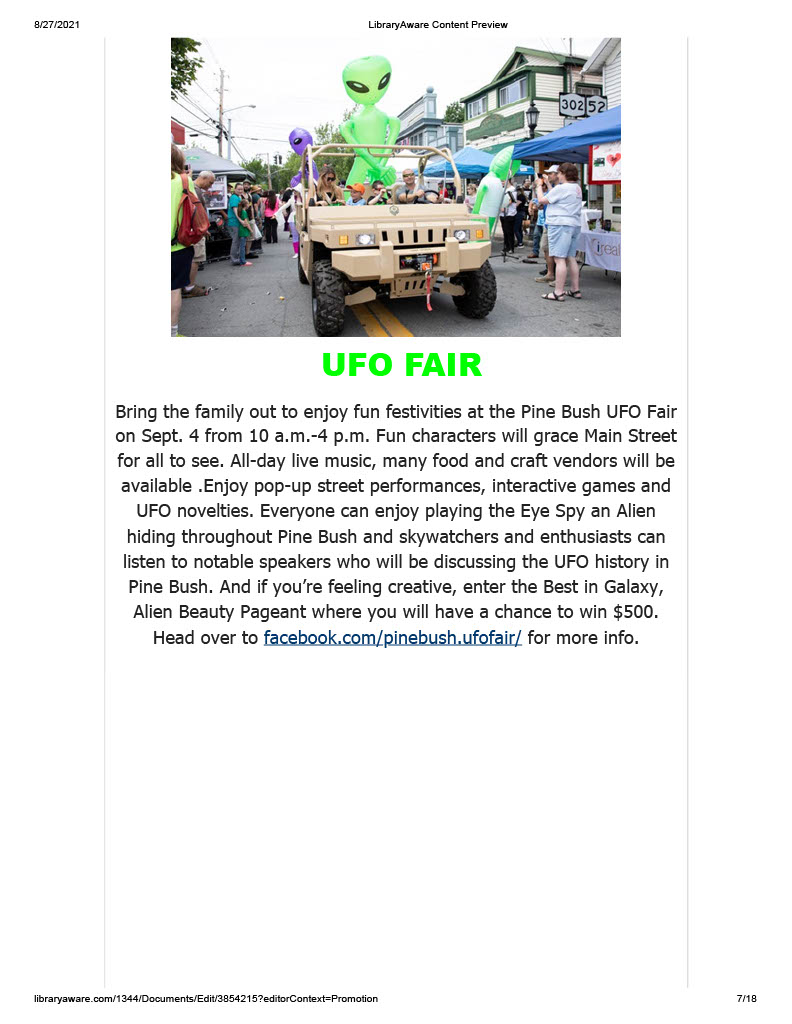
THEY’VE LANDED
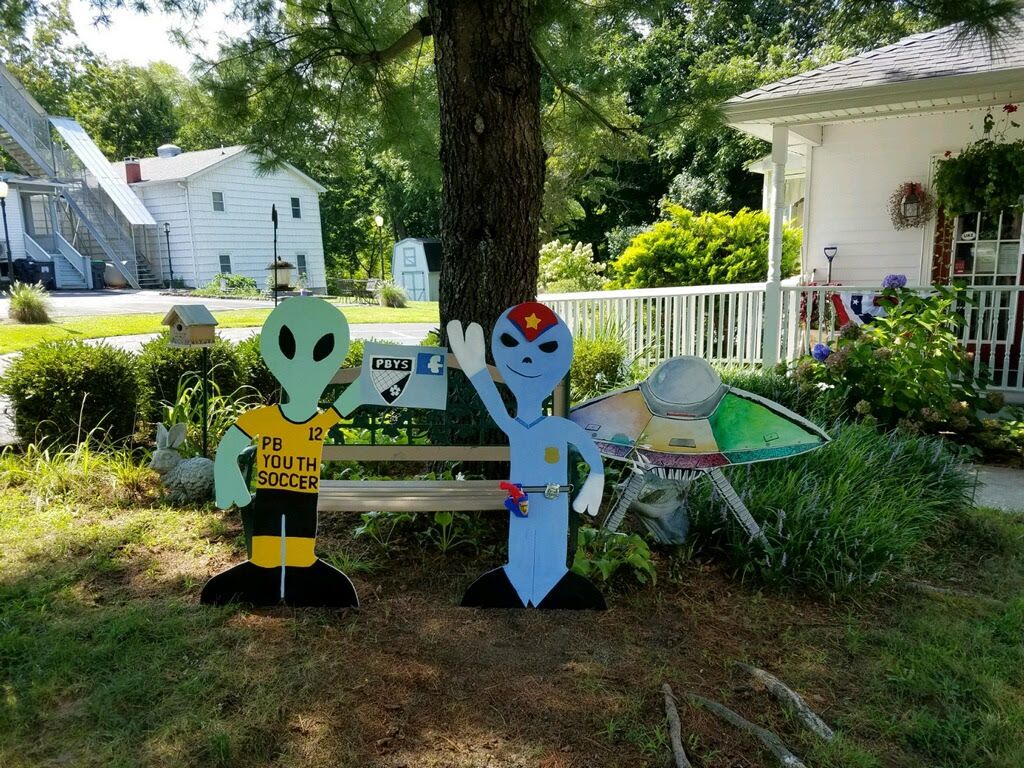
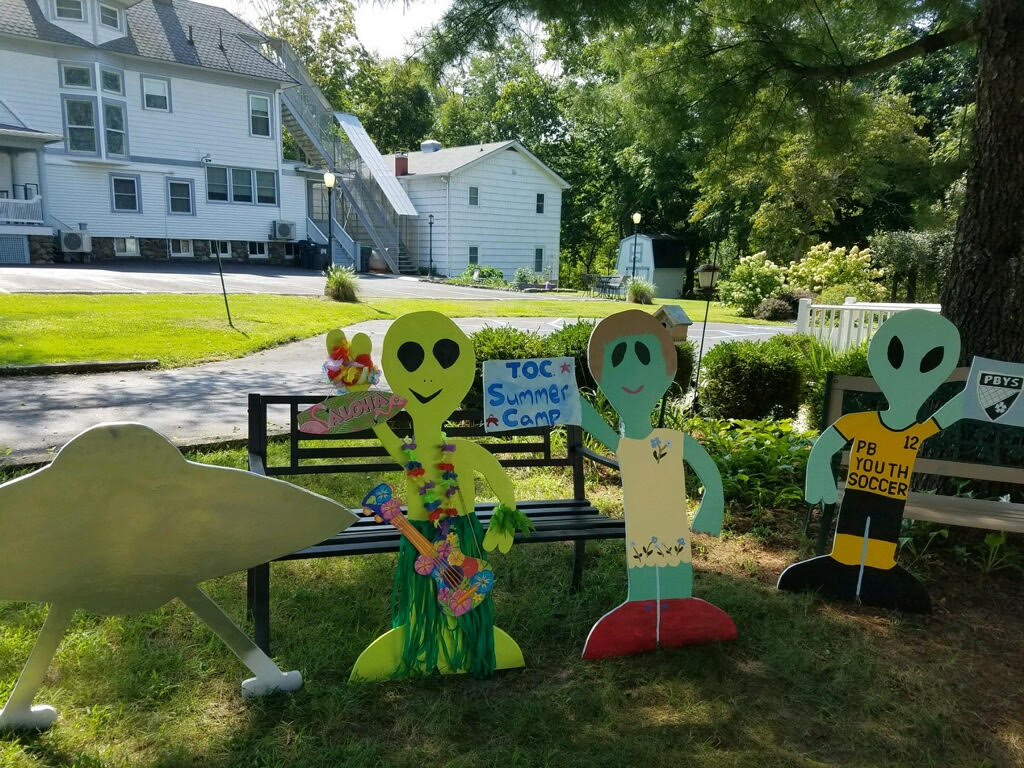
We had some more extraterrestrial visitors on Wednesday. They were checking up on the preparations for the UFO Festival on September 4th. Keep an eye out for more other worldly visitors around town and post your pictures in the comments below, email them to us PBL@rcls.org, or just PM them to us here.
Don’t forget to stop by the library on your way to the UFO Festival to check out our Yard Sale open from 9-3.
Image

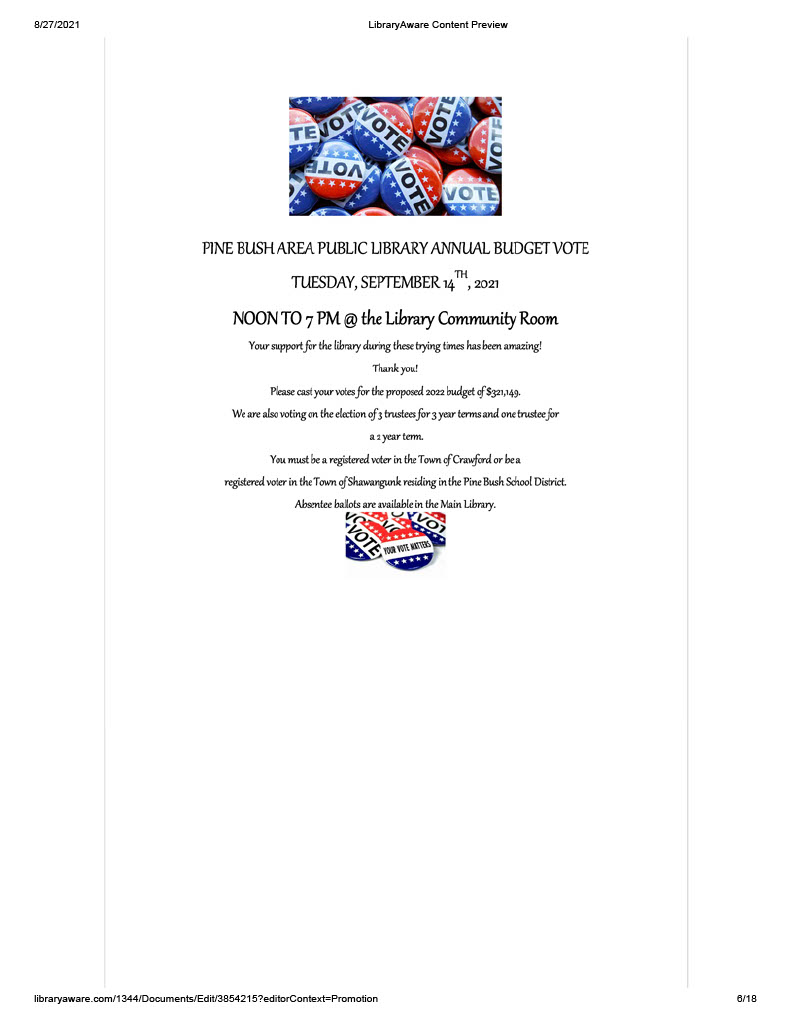
GET OUT AND VOTE!!!
Image

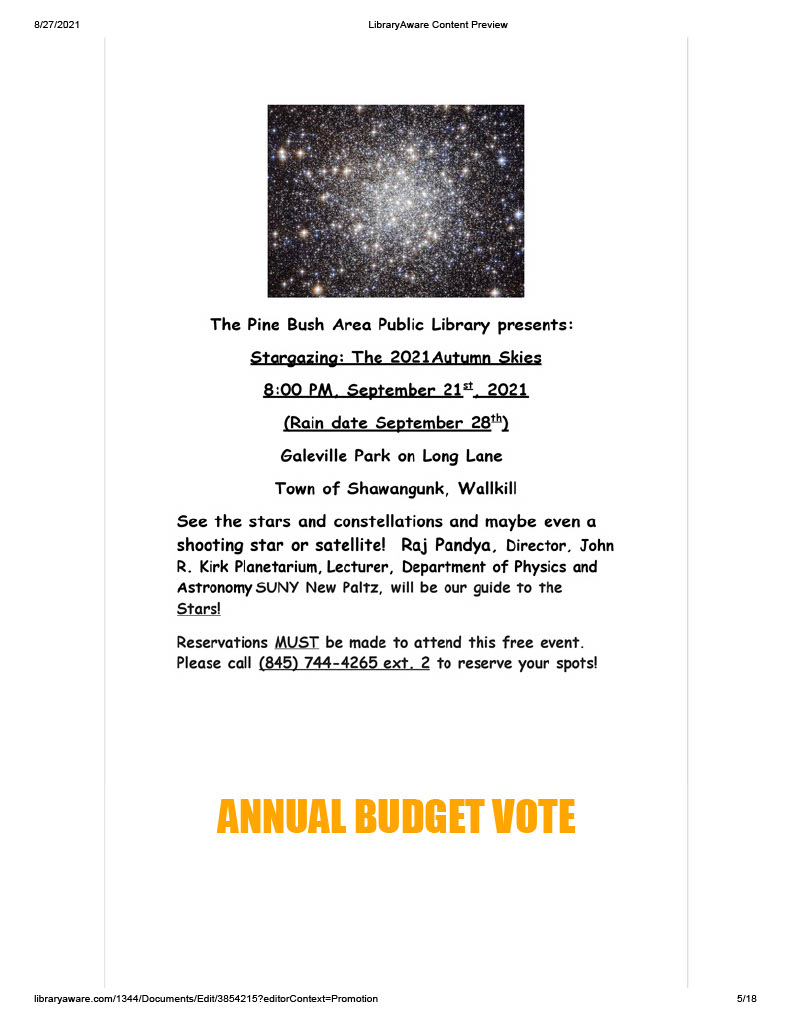
STAR GAZING RETURNS

The Pine Bush Area Public Library presents: Stargazing The 2021Autumn Skies
8:00 PM, September 21st, 2021 (Rain date September 28th)
Galeville Park on Long Lane Town of Shawangunk, Wallkill. See the stars and constellations and maybe even a shooting star or satellite! Raj Pandya, Director, John R. Kirk Planetarium, Lecturer, Department of Physics and Astronomy SUNY New Paltz, will be our guide to the Stars!
Reservations MUST be made to attend this free event.
Please call (845) 744-4265 ext. 2 to reserve your spots!
OUT LATEST YOUTUBE VIDEO
The Pine Bush Library would like to thank Trooper Bizjak and his K9 partner Versa for the amazing demonstration they put on for us Monday. We would also thank you, our patrons, for coming out and making this one of the most attended events in years.
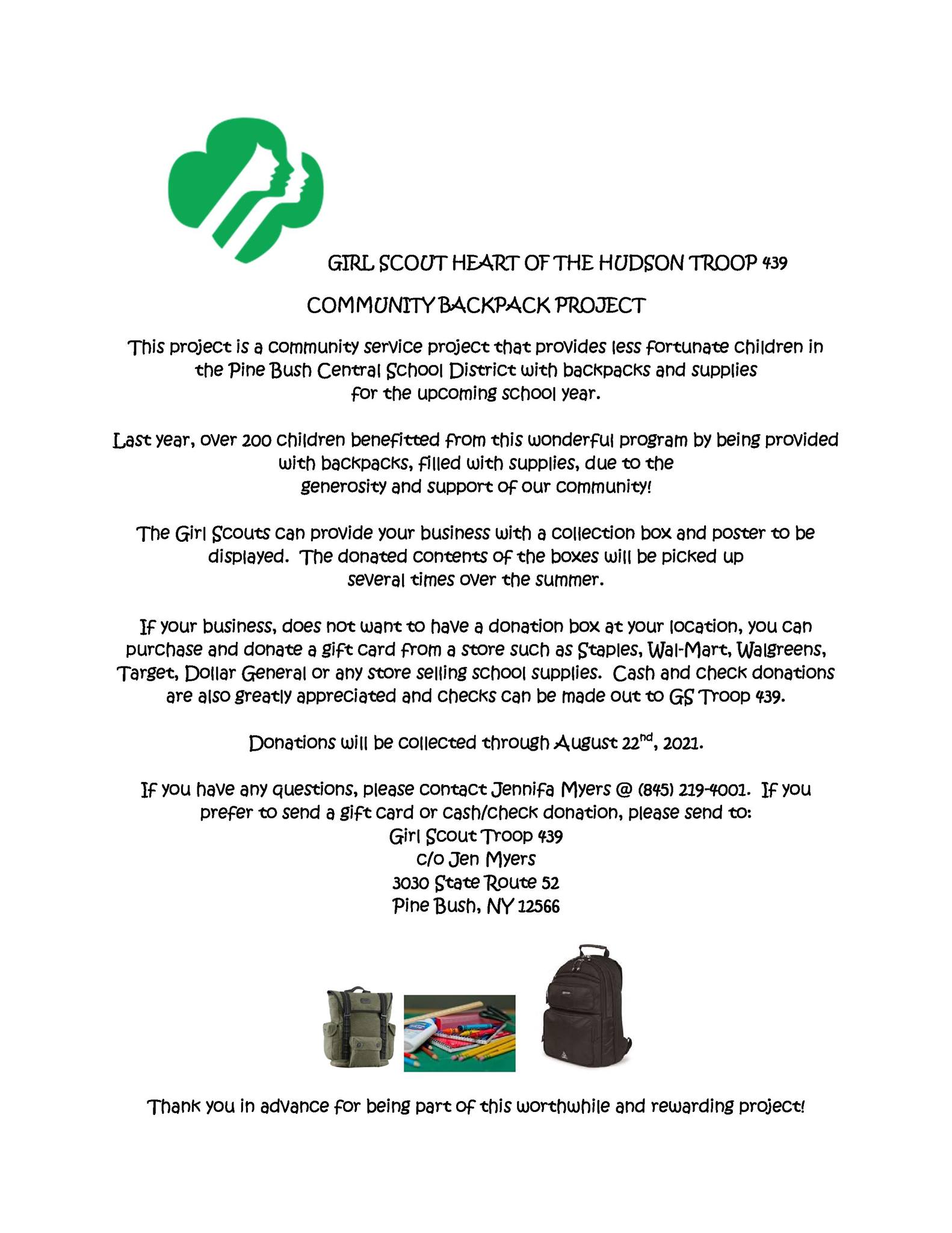
LEND A HELPING HAND TO THOSE IN NEED
Image
AUGUST NEWS LETTER
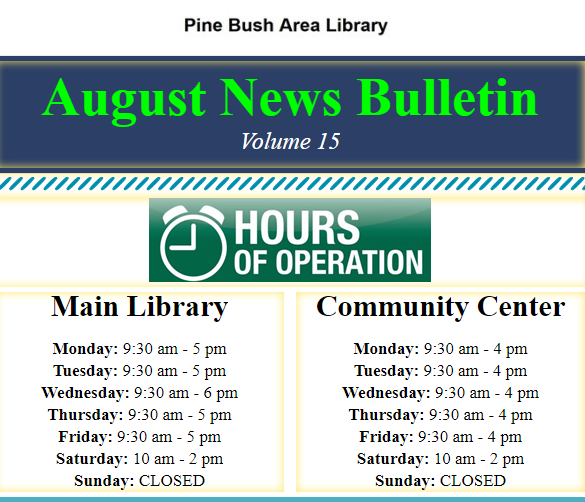
Our August news letter has been sent out. If you didn’t receive it and would like to we need your email address. You can email it to us at PBL@rcls.org, send us a privet message on Facebook or give us a call 845-744-4265 ext. 2.For anyone who wants a paper copy they will be available in the community center and main library.
ALIENS ARE RETURNING TO PINE BUSH
Image
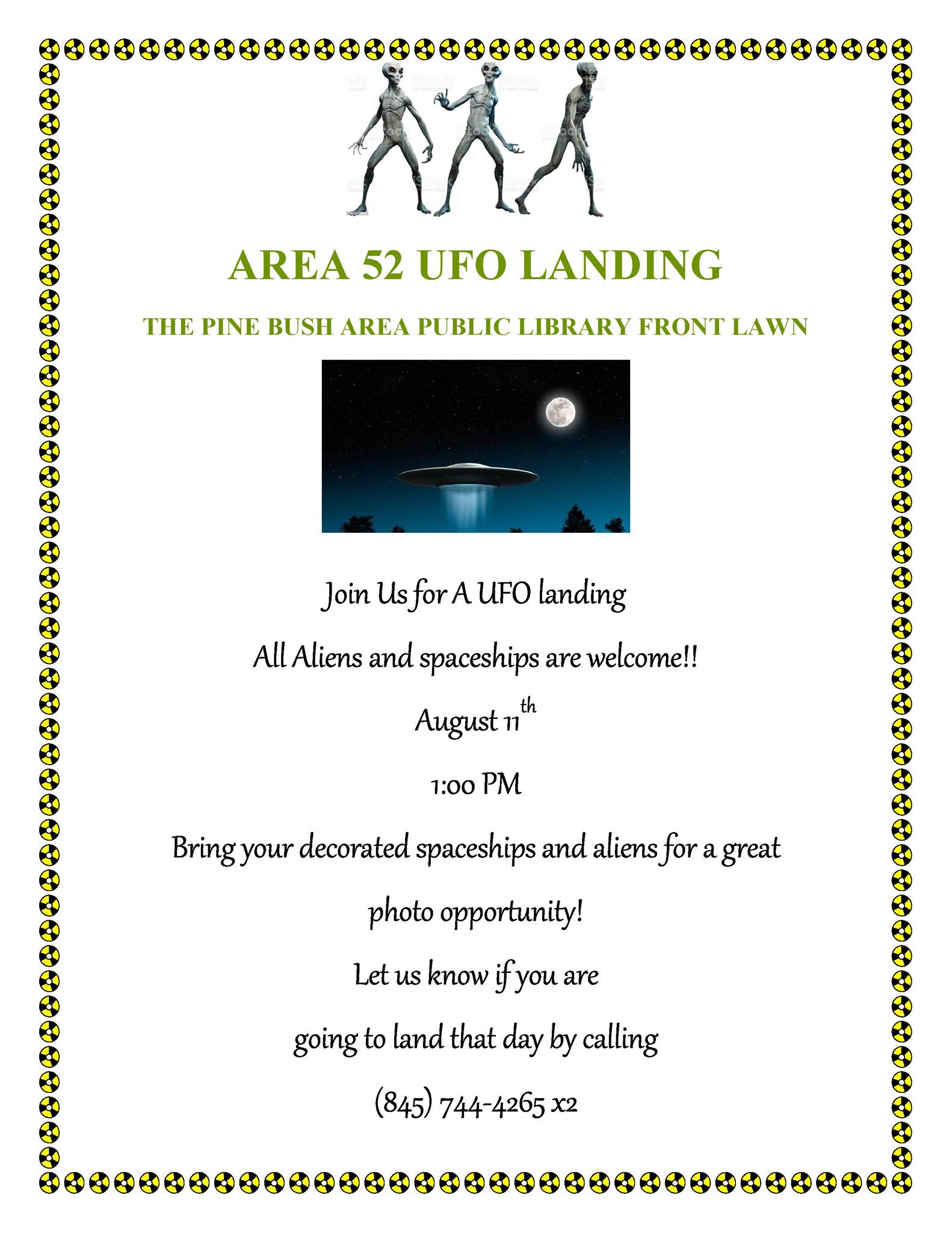
JOIN US!!!!!
Image

K9 Cop
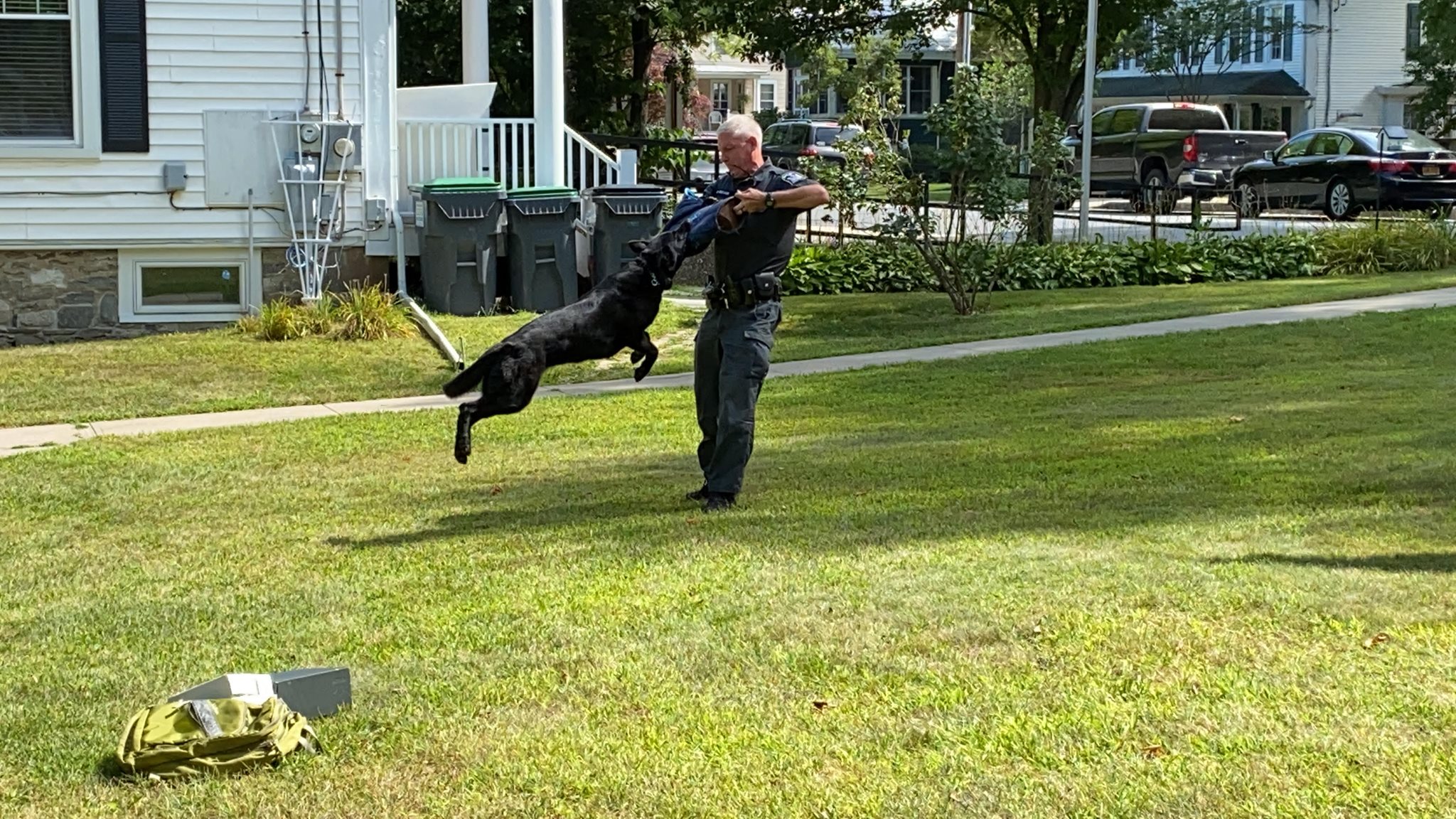
The Pine Bush Library would like to thank Trooper BBizjak and his K9 partner Versa for the amazing demonstration they put on for us Monday. We would also thank you, our patrons, for coming out and making this one of the most attended events in years. If you want to see the demonstration again or if you were unable to make it in person don’t worry! We will have the full presentation up on our YouTube channel by then end of the week.
RAVE REVIEWS BY JEAN EUSTANCE
Rave Reviews by Jean E. Eustance August 2021
Have you and your parents ever gone to an aquarium? Have you seen fish and other sea creatures swimming around in big tanks? A woman named Jeanne Power invented some of the first big fish tanks, meant for scientific study, and she found out the secrets of a tiny octopus which makes its own shell.
Last month I looked at children’s books about the sea, featuring scientists from the 20th century. Today I want to look at Secrets of the Sea, which is set in the 19th century. It is The Story of Jeanne Power, Revolutionary Marine Scientist. This picture book is found in the Juvenile Biography section in the Pine Bush Area Public Library.
Jeanne Villepreux-Power was born in France, and worked in Paris, and then got married and moved to Sicily with her husband. She liked the island of Sicily and started to study and draw all the land animals she saw. Then she wondered what the animals in the sea looked like. And more than that, what did the animals do? She worked and worked, and became a scientist when women were not expected to become scientists.
The book says, “Other naturalists studied the preserved bodies of dead sea creatures, but Jeanne wanted to study sea creatures as they lived. She wanted to meet them face-to-face. She wanted to see how they moved through the water, how they interacted with each other, how they grew and changed over time. She put her mind to work. Maybe a tank would do the trick, she thought. A large tank of clear glass, filled with salt water so animals could swim inside. That way, she could study sea creatures in her own home!”
She had to design and make the tank, herself, in 1832. It wasn’t just a fish bowl, it was an aquarium built for scientific study. An aquarium can be the large tank that the fish swim in. An aquarium, nowadays, can be the building that holds the big fish tanks, so people can come in and see them.
In Sicily, Jeanne Power asked the local fishermen to save sea animals for her, and she put them in her aquariums. Eventually she became fascinated with a small octopus called the paper nautilus. She found eggs and raised them and watched while the little octopi developed their “shells” on their heads. They did not steal their shells from other animals. They grew them, themselves. And these “shells” were really cases, to hold their eggs.
Jeanne Power had to push to get other scientists to pay attention. She had to repeat her experiments. She had to tell people that she had invented those aquariums.
“Jeanne joined many scientific academies throughout her life, a rare feat for a woman in the nineteenth century. Her research was published in several languages, and she earned the respect of her peers. This respect wasn’t just for her discovery that the paper nautilus creates its shell. With her aquariums, Jeanne paved the way for the study of living sea creatures. She brought humans and the sea closer together than ever before.”
So, if you go to an aquarium this summer, say “thank you” to Jeanne Power.
Image
Image

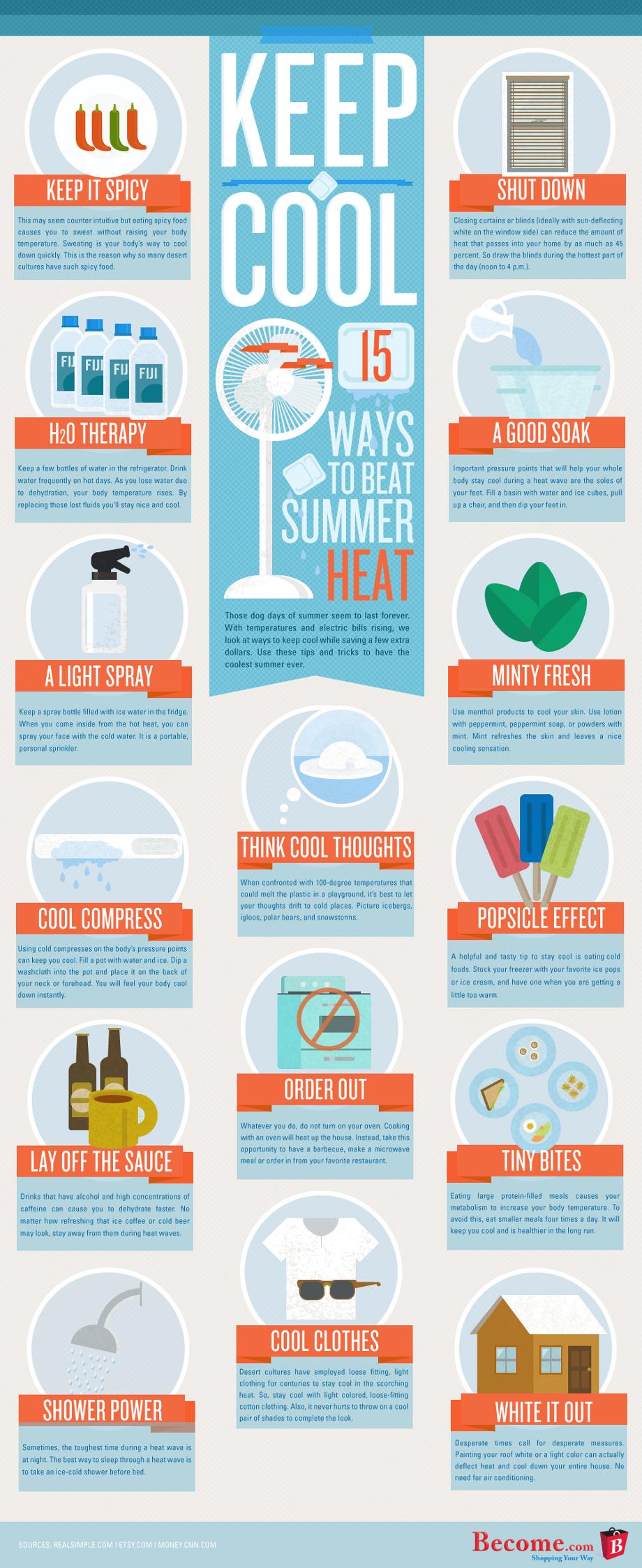
BEAT THE HEAT
Image
Rave Reviews by Jean E. Eustance July 2021
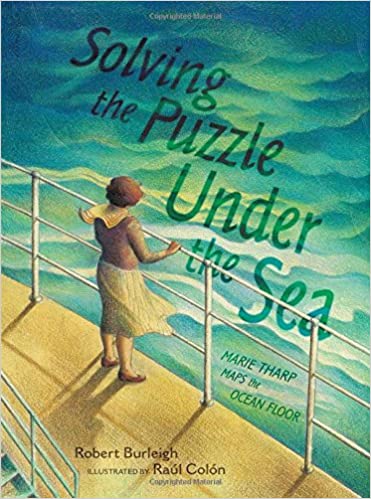
Do you like to read about the oceans of the world? The Pine Bush Area Public Library has some neat books about oceans, and mapping them. Look for them in the Children’s Department. If you remember The Magic School Bus On the Ocean Floor you might remember the bus driving off the edge of the Continental Shelf, into deeper water. Why do we know that there is a Continental Shelf, and why do we know nowadays that there are mountains and valleys under the waves? Thank Marie Tharp for mapping the ocean floor.
Solving the Puzzle Under the Sea is a picture book about Marie Tharp (1920-2006.) She grew up making maps. She became a scientist when women were not supposed to be scientists. She looked at the map of the world and wondered what was under the surface of the sea. Sound waves (sonar) was being used to find out how deep the ocean was, in various spots. She put together the different soundings, and mapped, first the Atlantic Ocean, and then the rest of the world’s oceans. She realized that there were mountains and valleys in the depths of the sea. The sea floor is not all flat. The sea floor looks a lot like the mountains and valleys on the continents that we live upon.
She even found the rift in the Atlantic, where the continental plates pull apart. Her work helped to prove the theory of Continental Drift. “One scientist put it very simply. ‘Marie didn’t just make maps. She understood how the Earth works,”
Two other scientists, Otis Barton and Will Beebe, wanted to see the fish and plants that live in the sea. They wanted to see what life looked like, way down in the depths. Otis and Will Discover the Deep: The Record-Setting Dive of the Bathysphere is a picture book about their work. On the page at the back of the book, it reads they “dove together in the Bathysphere at least nineteen times between May 27, 1930 and September 11, 1934. They were the first humans to see deep-ocean creatures alive.”
They were lucky to come back from these expeditions alive. The book shows their first dive on June 6, 1930, near Bermuda. “800 feet. Stop…They flipped on the Bathysphere’s searchlight. Their eyes followed the pale yellow beam that scattered…down, down, into the deep.” Their Bathysphere started other people on the road to making deep-sea submersibles so we can see the things that live way down, down into the deep.
Find these books at the Pine Bush Area Public Library, and go for a dive!
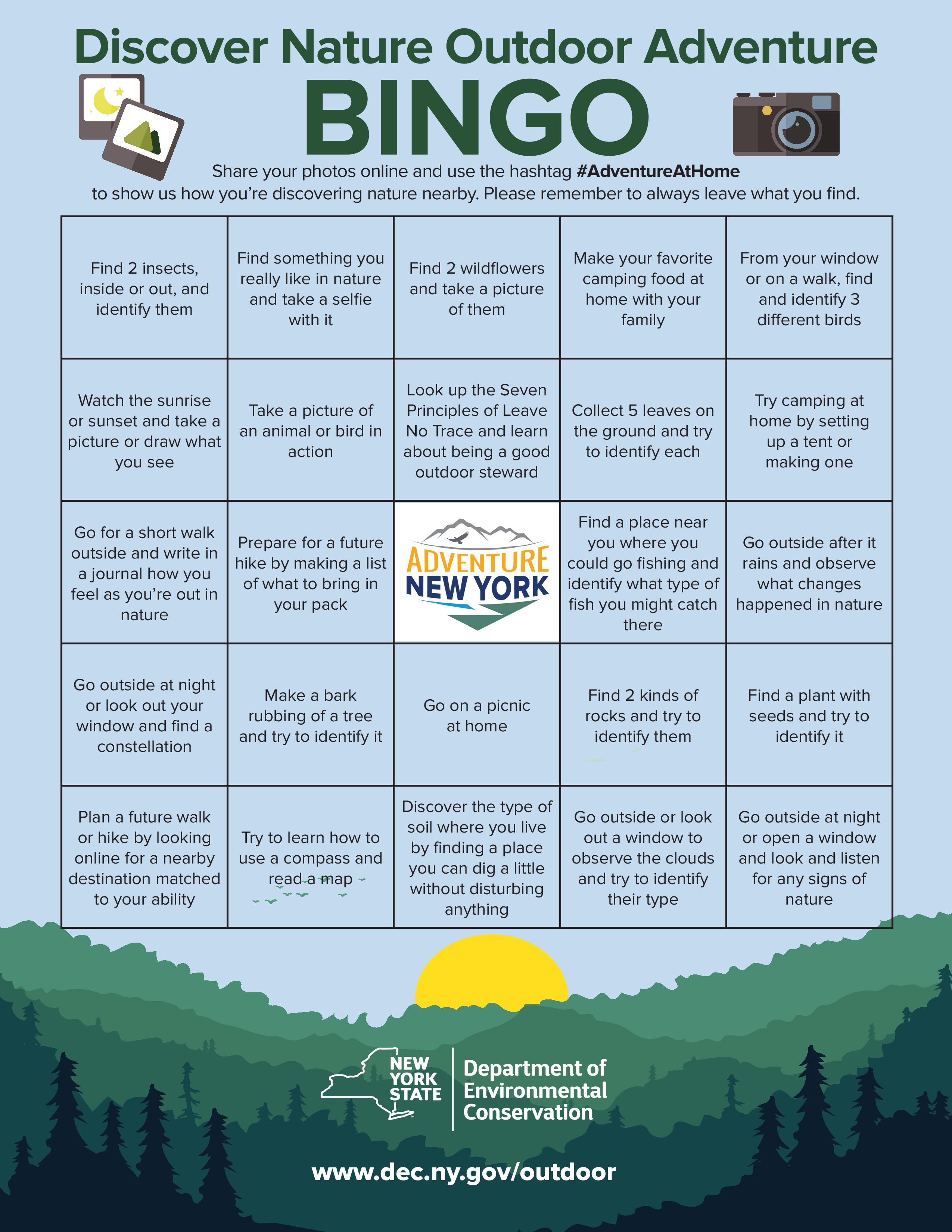
NATURE BINGO!!!!!!!
Image
 Pine Bush Area Public Library
You must be logged in to post a comment.